Fidelma and Bill are restoring a centuries-old stone farmhouse in Normandy, France. Follow the journey — the history, the craft, and the chaos.
La Normandie est un pays où l'histoire ne se visite pas — elle s'habite. Elle est inscrite dans la pierre de ses fermes, dans les noms de ses villages, dans le silence de ses cimetières militaires, et dans le rythme lent de ses marchés et de ses marées. Les Vikings s'y sont établis. Guillaume le Conquérant en est parti pour changer le monde. Des soldats alliés sont morts sur ses plages pour que l'Europe soit libre. Et à travers tout cela, les pommiers ont continué de fleurir, les vaches de brouter, et la mer de monter. C'est, au sens le plus profond du terme, un paysage qui se souvient.
Normandy is a land where history isn't visited—it's lived in. It's etched in the stone of its farmhouses, in the names of its villages, in the silence of its military cemeteries, and in the slow rhythm of its markets and tides. Vikings settled here. William the Conqueror set sail from here to change the world. Allied soldiers died on its beaches so that Europe might be free. And through it all, the apple trees continued to blossom, the cows to graze, and the sea to rise. It is, in the deepest sense of the word, a landscape that remembers.
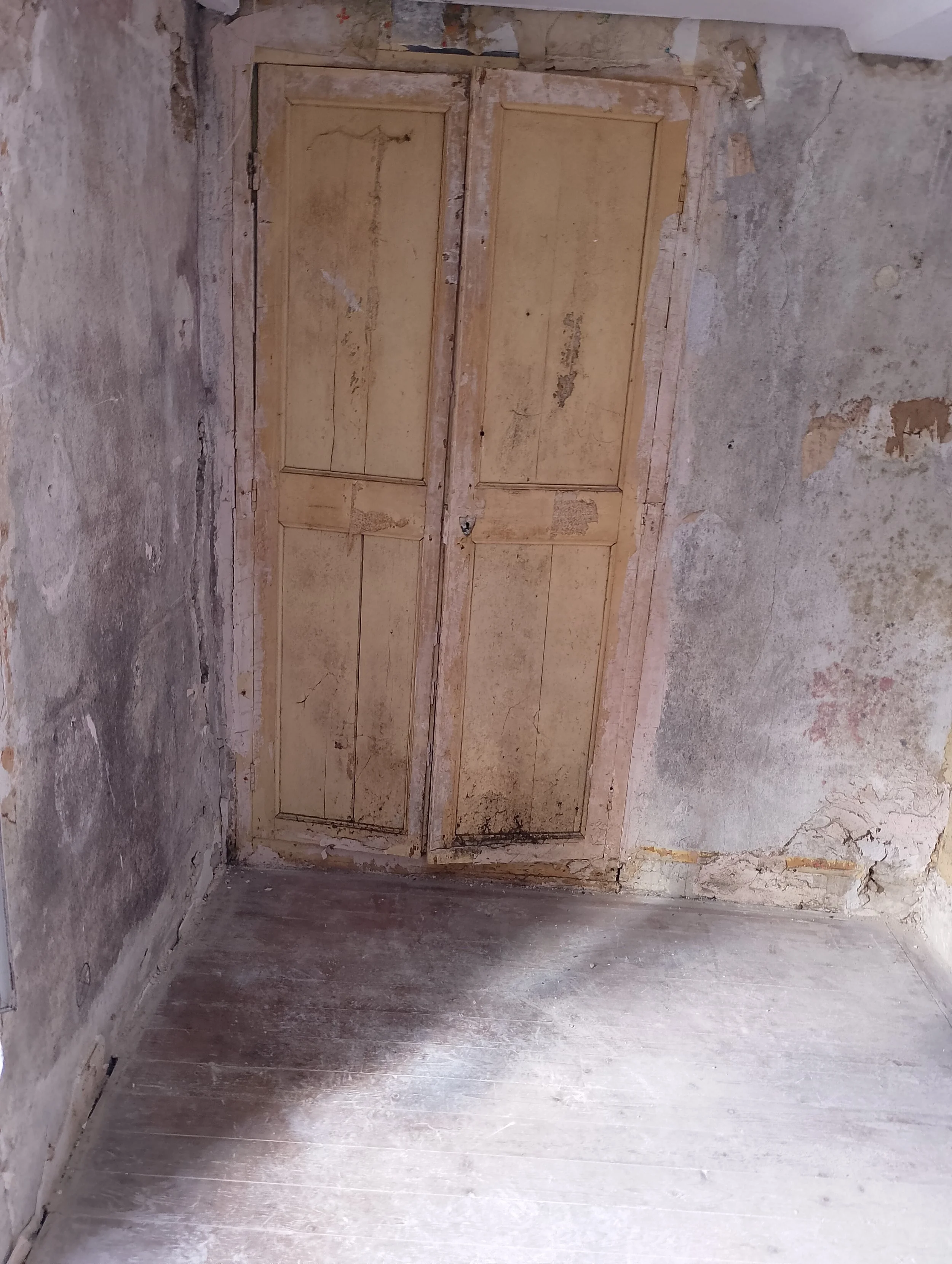
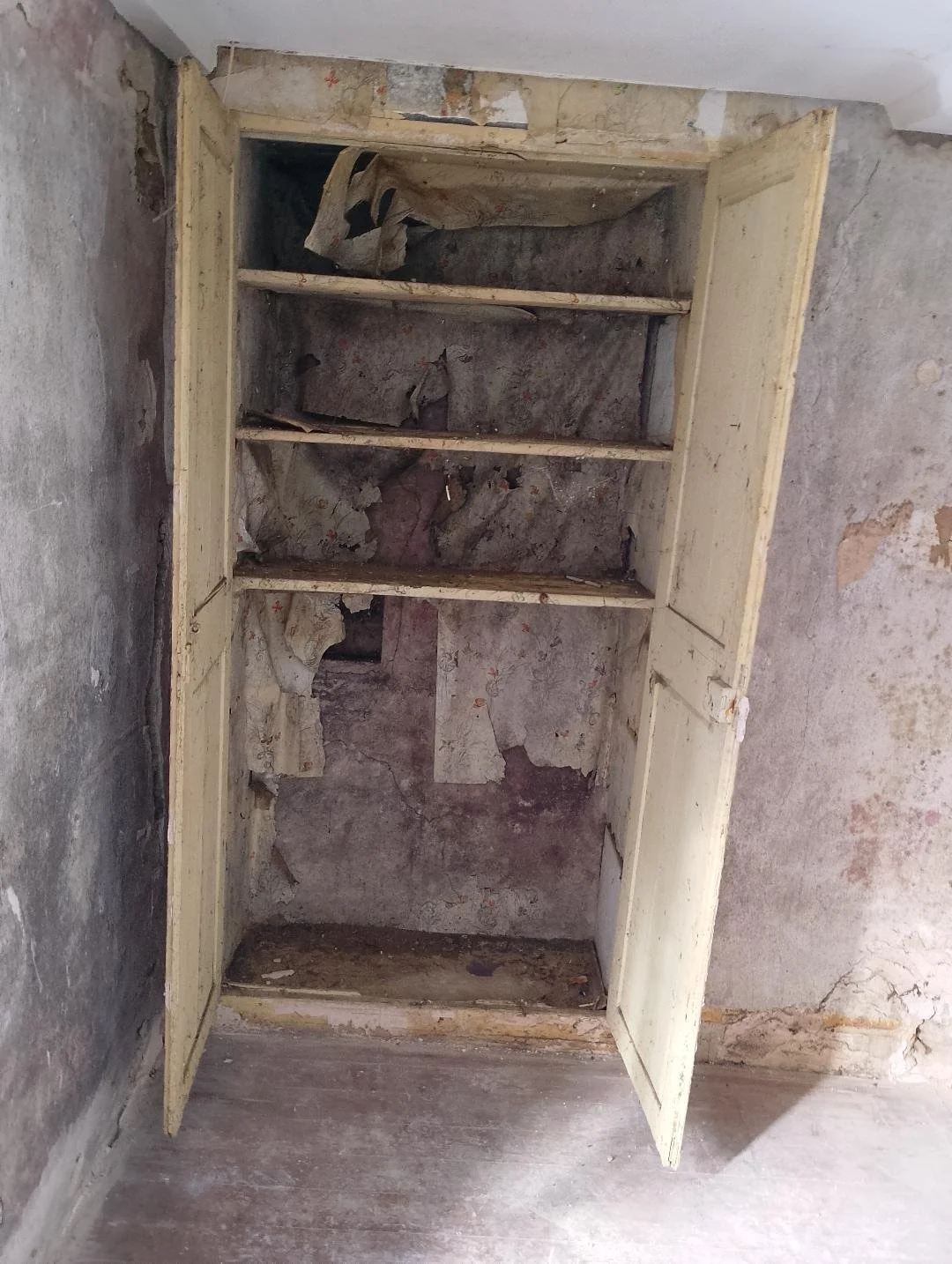
An old painted, pine cupboard recessed into the wall of the upstairs large bedroom. Ages old. Looks like there is the remnants of an old window or other wooden structure behind it. Just one of the surprises that this little house has revealed to us so far.